

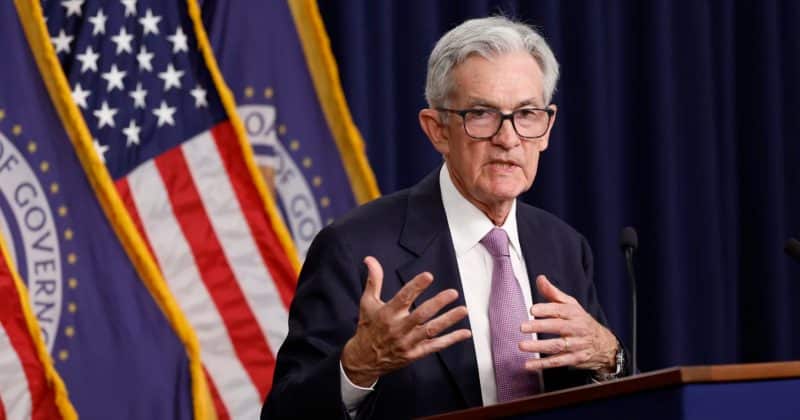
The Federal Reserve kept interest rates unchanged, maintaining the federal funds rate at 3.5% to 3.75% as markets turned cautious ahead of the decision. Attention now shifts to Chair Jerome Powell for guidance on how policymakers view the path of inflation and growth through the rest of the year.
In a statement issued on March 18, the Fed projected US GDP growth to ease slightly from 2.4% in 2026 to 2.1% in 2028, with the unemployment rate gradually falling from 4.4% to 4.2%. PCE inflation is forecast to decline from 2.7% to 2.0%, while core inflation is expected to remain near 2%.
The midpoint of the federal funds rate is projected to hold at around 3.1%, with policymakers now anticipating only two rate cuts over the next few years, including one in 2026.
The central bank noted heightened uncertainty about the economic outlook, including the possible impact of developments in the Middle East.
The decision, supported by all members except Stephen Miran, who preferred a 0.25 point rate cut, comes as inflation data surprised to the upside. February’s producer price index rose 0.7% month over month, more than double the 0.3% forecast. On a yearly basis, headline PPI increased 3.4%, above expectations of 3% and the prior 2.9% reading. Core wholesale prices, which exclude food and energy, climbed 3.9% year over year, also exceeding estimates.
At the same time, rising geopolitical tensions between the US and Iran have added another layer of uncertainty, reinforcing concerns that inflation could remain persistent. The combination of hotter data and geopolitical risk has weighed on sentiment across risk assets.
Crypto markets moved lower following the release. Bitcoin fell below $72,000, while broader markets also weakened. The S&P 500 and Nasdaq each declined about 0.7% on the day, reflecting a cautious response to both the inflation data and the Fed’s stance. Price action remained relatively muted after the rate decision, suggesting investors are waiting for clearer signals from Powell.



No Comment! Be the first one.