

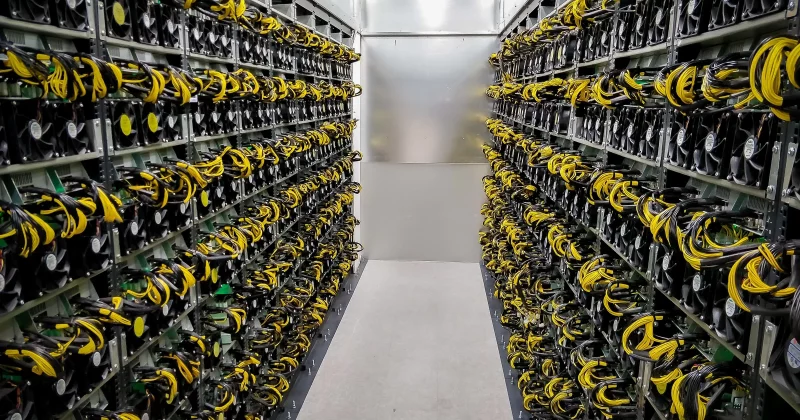
Bitcoin miners have spent years being valued on a single metric: how much hash rate they control. Bernstein thinks that framework is outdated. The firm sees miners sitting on something far more valuable than the ability to solve cryptographic puzzles, namely the power infrastructure that AI companies are desperately scrambling to secure.
The thesis centers on an estimated $90 billion wave of AI infrastructure investment. Miners who locked down grid capacity and built out high-density cooling systems for their rigs are now positioned to rent that exact same infrastructure to hyperscalers and AI firms willing to pay a premium for it.
The picks and the logic
Bernstein issued Outperform ratings on four names: IREN, Riot Platforms, CleanSpark, and Core Scientific. Among those, IREN got the spotlight treatment as the firm’s top pick, with a price target of $75.
These companies already control what’s hardest to get in today’s AI arms race: permitted sites, energized substations, and cooling capable of handling dense GPU clusters.
Core Scientific already demonstrated this model when it struck a multi-billion-dollar deal with CoreWeave to host AI workloads at its facilities. That agreement essentially served as proof of concept for the entire sector, showing that the colocation playbook could work for miners willing to diversify their revenue streams.
Why miners, specifically
Bernstein’s framing redefines these companies. Instead of viewing them purely as digital-asset producers whose fortunes rise and fall with Bitcoin’s price, the firm is positioning them as energy-infrastructure businesses. That’s a meaningful distinction because it implies a more stable, recurring revenue base from long-term AI hosting contracts, layered on top of whatever Bitcoin mining continues to generate.
In the US, connecting a new large-load facility to the electrical grid involves utility approval timelines that can stretch for years. Miners who already completed that process own a resource that money alone can’t buy quickly.
Execution risk is real
Not every miner with a substation and some fans is going to successfully pivot into an AI infrastructure company. The transition requires substantial capital expenditure. GPU-ready data centers need different networking, different power distribution, and different cooling architectures than ASIC mining rigs.
Bernstein’s call acknowledges this variability. Not all four companies are at the same stage of readiness, and execution success will differ across the sector. IREN’s position as the top pick suggests the firm sees it as furthest along in bridging that gap, but the $75 price target still represents a bet on future delivery rather than current results.
For investors watching this space, the key metric to track isn’t hash rate anymore. It’s contracted megawatts allocated to AI versus mining, the credit quality of hosting counterparties, and the capital required to retrofit existing sites.





No Comment! Be the first one.